

Hollywood has always been a place where art meets technology. Sound, color, CGI, motion capture, streaming—each wave rewrote the rules. Now, another shift is happening, and it feels bigger somehow. Smarter. Faster. More personal. The way AI is used in movies is reshaping scripts, performances, visuals, and even how stories reach us. This is not just about flashy effects. It is about how films are imagined, made, marketed, and remembered. From writers’ rooms in Los Angeles to post-production labs in California, artificial intelligence is quietly but firmly becoming part of the creative bloodstream.
Let me explain how this shift is unfolding, why it matters to audiences in the US, and what it means for the future of movie-making as we know it.
Before cameras roll or actors rehearse lines, a movie begins with an idea. That early stage is where AI is already making waves. It is subtle, sometimes invisible, but powerful.
Writing is deeply human. Still, many screenwriters now use AI tools as brainstorming partners. Platforms inspired by OpenAI models help writers test dialogue flow, tighten pacing, or explore alternate endings. You know what? It is less about replacing creativity and more about nudging it forward on days when inspiration feels stuck.
Some studios quietly analyze past box office hits using AI filmmaking tools to understand patterns in character arcs or genre pacing. This does not mean formulas rule everything. Instead, writers get feedback faster, almost like having a tireless intern who never runs out of coffee.
Studios in AI in Hollywood circles use data-driven models to gauge how a story could land with different demographics across the US. Will a Midwestern family respond the same way as a New York indie crowd? AI can simulate reactions based on past viewing habits. It sounds clinical, yet it often saves projects from costly misfires.
Interestingly, directors still make the final call. AI suggests. Humans decide. That balance matters.
Once the script locks, the chaos of production begins. Lights, cameras, weather delays, and budget stress. This is where AI movie technology quietly smooths the bumps.
Productions from Netflix and Warner Bros. use AI systems to plan shooting schedules. These tools factor in actor availability, location costs, and even likely weather patterns. Honestly, anything that saves a 5 am call time from turning into a disaster feels like magic.
For indie filmmakers, this tech is a lifeline. Smaller teams can now manage complexity that once required huge production offices.
Unreal Engine, originally built for gaming, has become a star player in artificial intelligence films. Directors like Jon Favreau used it on The Mandalorian to blend real actors with virtual environments. AI helps render lighting and depth in real time, so actors see the world they are performing in.
It changes performances. When actors react to something they can actually see, their emotions feel grounded. The audience notices, even if they cannot explain why.
This part sparks debate at dinner tables and studio boardrooms alike. What happens when AI touches human faces and voices?
Tom Hanks openly discussed using AI-based de-aging tech to play younger versions of himself. Instead of heavy makeup or recasting, AI analyzes past performances and recreates subtle expressions. The result feels more honest, almost like cinematic time travel.
Hanks framed it. Technology let him stay emotionally connected to the character across decades. That perspective eased some fears.
In films like The Irishman, AI-assisted visual tools helped Robert De Niro portray a younger self. The tech had limits, sure. Yet it opened doors. Legendary actors can now tell long-spanning stories without breaking immersion.
There is a mild contradiction here. AI preserves legacy, but it also raises questions about opportunities for younger actors. Studios are still figuring that out.
If production is controlled chaos, post-production is quiet intensity. Editors, sound designers, and colorists shape the final heartbeat of a movie. AI is becoming their behind-the-scenes partner.
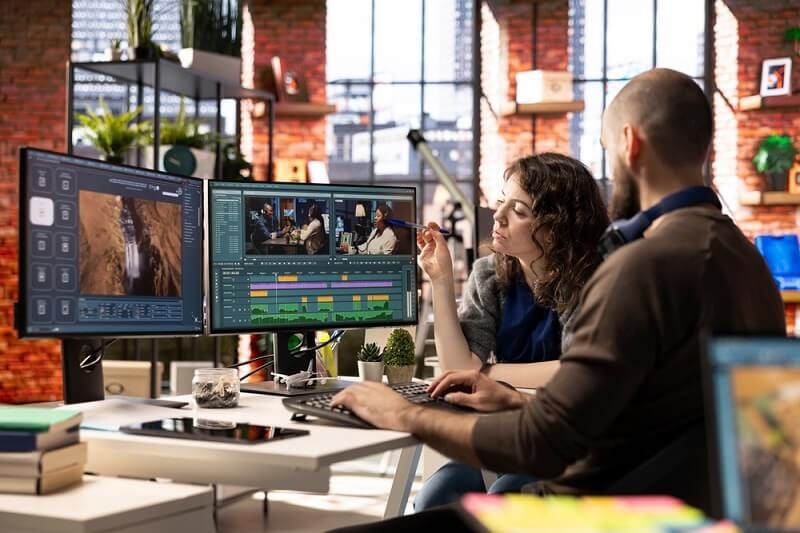
AI-assisted editing software from Adobe helps flag the strongest takes based on facial cues and audio clarity. Editors still craft rhythm and emotion, but they spend less time scrubbing endless footage.
Think of it like a smart highlighter. It does not write the essay. It just shows you where to look.
Some artificial intelligence films experiment with AI-generated background scores. These systems analyze mood and tempo, then suggest musical themes. Directors tweak them, composers refine them. The final sound feels human because it still is.
This approach speeds things up, which matters in a streaming-first era where turnaround time is tight.
A movie does not end when the credits roll. It lives or dies by how it reaches audiences.
Studios use AI to cut multiple trailer versions for different regions and platforms. A horror fan in Texas might see a scarier cut than a drama lover in Oregon. Same film. Different emotional hooks.
You may not notice, but you probably feel it.
AI predicts optimal release windows by scanning sports schedules, holidays, and streaming trends across the US. This helps studios avoid crowded weekends and find breathing room. For theaters struggling post-pandemic, this precision matters.
Not everyone is cheering. And honestly, that skepticism is healthy.
Recent industry strikes highlighted fears around AI training on human work without consent. Writers want protection. Actors want control over digital likenesses. These concerns are shaping new contracts and laws.
The conversation is not anti-technology. It is about respect.
Some filmmakers, like Martin Scorsese, worry about stories becoming data-driven. He values messiness, risk, and emotional surprise. And he has a point. Not everything meaningful can be predicted.
Here is the thing, though. AI is a tool, not a taste-maker. When used carefully, it supports vision rather than flattening it.
The way AI is used in movies is changing Hollywood forever, but not by erasing its soul. Instead, it is reshaping workflows, expanding creative options, and challenging old assumptions. From Tom Hanks stepping through digital decades to indie directors building virtual worlds, AI is now part of the cinematic language.
Hollywood has faced reinvention before. It survived. It evolved. This moment feels similar, just faster. And maybe, just maybe, more human than we expected.
No. AI supports filmmakers by handling repetitive tasks, but creative decisions still come from humans.
Laws are evolving. Current agreements focus on consent and control over digital likenesses.
Most viewers care about story and emotion. When AI helps deliver that, acceptance follows.
Yes, especially for indie films. Smarter planning and virtual tools reduce expenses over time.
This content was created by AI